
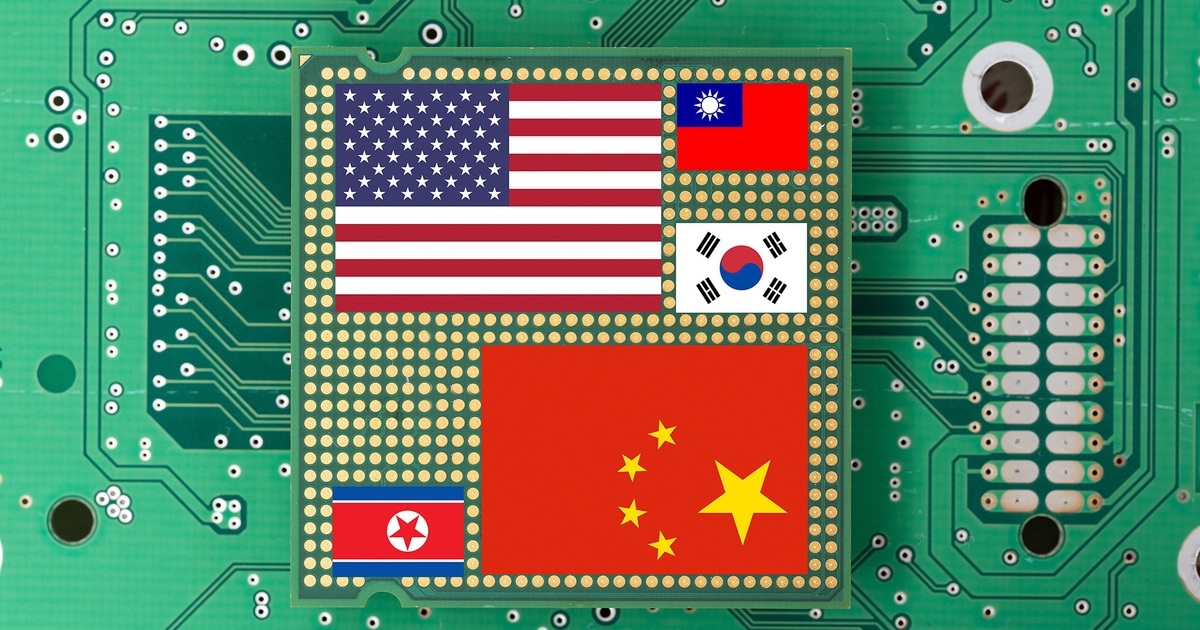
The Trillion-Greenback Chess Sport
The semiconductor business stands on the epicenter of world commerce tensions, with tariffs changing into highly effective items in a world chess match. What was as soon as the world’s most globalized provide chain, with excessive regional specialization throughout design, fabrication, supplies, and meeting, is now fragmenting underneath geopolitical pressures. Regardless of these challenges, we count on that the semiconductor market shall be valued at $1 trillion in income by 2029, in line with Omdia’s Semiconductor Utility Forecast (AMFT) 2Q25 report, this primarily pushed by surging demand for AI chips and rising reminiscence costs.
Value Shockwaves By the Provide Chain
Quick tariff impacts despatched price will increase all through the semiconductor ecosystem. Nvidia, for instance, has raised costs on practically all its AI GPUs and graphics playing cards, with gaming fashions rising by 5–10% and high-end AI accelerators by as a lot as 15%. The corporate factors to elevated manufacturing bills and new U.S. tariffs on imported elements and completed merchandise as the principle causes for these hikes.
TSMC, the highest contract chipmaker globally, can be contemplating a ten% worth improve for superior wafers. At its Arizona facility, the associated fee to provide 4nm chips is roughly 30% greater than in Taiwan, reflecting the premium of U.S.-based manufacturing. “These greater prices are more likely to be handed alongside to customers, elevating costs for electronics from smartphones to vehicles,” notes Saloni Gankar, Senior Analyst at Omdia. “Nonetheless, robust AI demand is presently offsetting any main destructive results.”
Associated:Qualcomm Enters Data Center AI Chip Market to Problem Nvidia, AMD
The business has seen sharp swings in response to tariff information. For example, Tokyo Electron’s shares initially dropped 8% on tariff bulletins, solely to rebound after a pause was declared. This unpredictability is inflicting producers to delay gear purchases and rethink world methods, probably decreasing business progress to single digits within the coming yr.
Measurable tariff affect on semiconductor forecasts
Just lately imposed tariffs have impacted forecasted unit cargo progress of merchandise with excessive semiconductor content material. Since April 2025, when the tariffs have been in full impact, Omdia has adjusted forecasts in a number of software classes to mirror present circumstances that can affect progress over the following 5 years.
“My argument is that semiconductor income for these merchandise will improve largely due to the impact of the tariffs totally applied in April of this yr,” explains Myson Robles-Bruce, Senior Principal Analyst at Omdia. “The will increase in anticipated semiconductor revenues appear to correlate with declines in unit shipments for these merchandise, which possible signifies that the extra tariffs have began to have an actual market affect now and into the forecast interval.”
Associated:US Approves Some Nvidia UAE Gross sales in Trump AI Diplomacy Step
Comparability knowledge between Omdia’s Utility Market Forecast Device (AMFT) 1Q25 version, printed close to the tip of March 2025, and the 2Q25 version launched in June 2025 gives proof of tariff affect. Elevated Semi I/O ratios (semiconductor income divided by OEM manufacturing unit income) are in comparison with declines in unit shipments, each on a share foundation, between the 1Q25 and 2Q25 editions of AMFT. The added tariffs raised the anticipated quantity of semiconductor income in relation to manufacturing unit income, which can possible lead to decrease demand and a decline in unit cargo quantity.
Though this evaluation contains different components resembling product design innovation, cyclical adjustments in semiconductor element pricing and macroeconomic circumstances, Robles-Bruce notes that the timing of those forecast revisions aligns with the implementation of latest tariffs following the earlier replace in March 2025, indicating tariffs have had a big affect.
Associated:The AI Chip Wars Are Lifeless. Lengthy Reside the System Wars
Manufacturing as a Strategic Asset
“I feel we’re seeing the entire manufacturing phase more and more changing into a strategic asset,” explains Joanne Goh, Senior Analysis Supervisor at Omdia. “Tariffs together with different coverage shifts are getting used not simply as a protectionist software, but it surely’s additionally an incentive for reshoring to boost the manufacturing capabilities.”
This strategic shift is essentially altering how firms strategy their operations. As Goh notes: “There’s a clear shift away from optimizing purely for world efficiencies in the direction of constructing extra regionally resilient ecosystem with the intention to safe the provision chain.”
The Essential Supplies Battleground
Maybe most regarding is the rising competitors for vital supplies important to semiconductor manufacturing. China controls many of the world mining manufacturing and processing capability for a lot of of those supplies and has strategically restricted exports of vital components like gallium and germanium in response to U.S. export controls.
“China is not sitting again,” notes Saloni Gankar. “Self-sufficiency in semiconductors has been their nationwide precedence and it is a central piece proper now of their 14th five-year plan with a powerful give attention to compound semiconductors resembling SiC and GaN.These restrictions have pushed materials prices up by 30–50%, creating vital vulnerabilities in provide chains. Nations are actively working to scale back this dependency, however various sources require time and big funding to develop.”
Regional realignment: The top of world integration
The semiconductor business is quickly shifting from world integration towards regional ecosystems that prioritize political alignment and provide chain redundancy. As Gankar observes, “We’re seeing tighter export controls, extra focused tariffs, and rising stress to localize provide chains based mostly on geopolitical alignment.” This evolving panorama implies that firms could quickly must adapt their chip design and manufacturing processes to satisfy the necessities of various areas, a change that’s already driving vital strategic investments worldwide to bolster native manufacturing and cut back dependency on world networks.
United States: The Silicon Defend
The U.S. is tightening export controls on superior expertise to China and urging its allies to do the identical, whereas additionally ramping up home semiconductor manufacturing. TSMC has introduced a big improve in its U.S. funding, now totalling $165 billion, with plans for 3 new fabrication vegetation. The corporate started producing 4nm chips in late 2024 and goals to introduce 3nm and 2nm processes by 2028 and the tip of the last decade, respectively.
In the meantime, the brand new U.S. administration has reversed the earlier administration’s AI diffusion coverage and additional tightened chip export controls to China, signalling a method centered on deepening AI partnerships with trusted nations and safeguarding delicate applied sciences from strategic rivals.
China: The Self-Reliance Push
China’s response has been equally strategic. “Right now, nearly half of the registered capital in China’s chip business is both state-owned or state-controlled,” explains Gankar. “By coordinated funding efforts, China is channelling sources into constructing home capabilities and pressuring home industries like EV makers to supply extra chips from native suppliers.”
This self-reliance technique extends to expertise growth, with a specific give attention to compound semiconductors that may assist circumvent a number of the limitations imposed by export controls.
Europe: The Dresden Hall
Europe is exhibiting renewed urgency across the EU Chips Act, specializing in strategic initiatives just like the Dresden Hall in Germany to scale back reliance on Asia and the U.S. Nonetheless, Europe nonetheless faces severe challenges, from vitality prices to expert labour shortages that affect its competitiveness.
Japan: The AI Funding
Japan is making substantial commitments, planning to speculate greater than 10 trillion yen into semiconductors and AI over the following seven years. The 2025 price range alone allocates vital funding to Rapidus, an AI chip maker, with the federal government stepping in as a significant shareholder.
India: The New Contender
India is shifting shortly to change into a severe participant within the world semiconductor race. Regardless of not being historically central in semiconductor manufacturing, India is actively courting worldwide companions by way of strategic incentives. The federal government not too long ago permitted a sixth semiconductor fab, a three way partnership between HCL and Foxconn, with 5 extra underneath building. Companies like Micron and Utilized Supplies have introduced main investments within the nation.
Affect On AI Chip Improvement
The tariff panorama is having profound results on AI chip growth, creating each challenges and alternatives on this vital expertise sector. As AI turns into more and more central to nationwide safety and financial competitiveness, the race to develop and management superior AI chips has intensified.
The restrictions on superior semiconductor gear exports to China have created a bifurcated growth path. Whereas U.S. firms like NVIDIA and AMD proceed pushing the boundaries with chips just like the H100 and MI300, Chinese language companies are pursuing various architectures that may ship AI efficiency inside the constraints of obtainable manufacturing expertise.
This divergence is accelerating innovation as firms on each side search aggressive benefits by way of novel designs relatively than relying solely on manufacturing course of advances. The result’s a extra various AI chip ecosystem, with specialised architectures rising for various AI workloads and deployment eventualities.
The elevated prices and provide chain complexities are significantly difficult for startups growing new AI chip designs, probably concentrating innovation energy in bigger firms with the sources to navigate the fragmented panorama.
Semiconductor firms are growing artistic approaches to navigate this fragmented panorama:
Twin-Shoring Fashions
Corporations like Analog Gadgets and GlobalFoundries are adopting dual-shoring fashions, splitting manufacturing between the U.S. and Europe to qualify for a number of subsidy packages underneath each the US CHIPS Act and the European Chips Act.
Strategic Relocations
Samsung has relocated a share of its NAND flash manufacturing from China to the U.S. to leverage CHIPS Act incentives, demonstrating how firms are strategically repositioning manufacturing to align with political realities.
Non-Conventional Gamers Getting into the Subject
The aggressive panorama is additional sophisticated by non-traditional gamers leaping into semiconductor design. “It is not simply governments which can be competing–tech platforms, automakers, and even hyperscalers resembling Google at the moment are designing their very own chips,” notes Gankar. “That is heating up the competitors for expertise and remodeling the semiconductor market in methods we have not seen earlier than.”
Automation and Superior Manufacturing
The tariff surroundings is driving elevated funding in automation and superior manufacturing capabilities. Goh notes: “We’re anticipating a rise in capital expenditure, particularly in superior equipment and automation. Once we see home manufacturing scale up, significantly within the subsequent technology of producing sectors like EVs and superior semiconductor packaging, we imagine that there’s a corresponding want for extremely subtle manufacturing capabilities.”
This shift extends past simply reshoring manufacturing. As Goh factors out: “BYD may be very profitable within the China home market. And with that, the event and the expansion of BYD has introduced up the provision chain, the automation distributors that work very carefully with them. And with the reshoring or perhaps with the rise of that demand within the European market, they arrange a plant in Japanese Europe. And so they sort of introduced your entire provide chain to enter into the Japanese European market as properly.”
Expertise Acceleration Amid Uncertainty
Regardless of, or maybe due to, these challenges, technological development continues at a breakneck tempo. Final month, TSMC launched the world’s most superior 2nm chip, promising 10–15% sooner computing speeds or 20–30% energy discount in comparison with earlier 3nm expertise.
This development comes as demand surges for AI-optimized semiconductors, driving historic investments in manufacturing capability. The race for technological management continues even because the business fragments alongside geopolitical strains.
The Information Sovereignty Dimension
Past bodily parts, knowledge is rising as one other entrance within the semiconductor commerce conflict. Anna Ahrens, Principal Analyst at Omdia factors out: “We’re not dealing with the tariffs on knowledge but, however we’d face some native necessities to the information storage, to the information sharing, particularly to the cross-border knowledge sharing.”
That is driving elevated utilization of commercial edge computing and localized cloud options. In line with our analysis, over 50% of commercial producers plan to extend edge computing utilization inside the subsequent 18 months, accelerating a development towards knowledge localization that parallels the bodily provide chain fragmentation.
Trying Forward: Resilience Over Effectivity
The semiconductor business is present process a elementary transformation from a mannequin optimized for world effectivity to 1 prioritizing resilience and safety. “Provide chain resilience and sustainability are not buzzwords,” Gankar emphasizes. “They’re now strategic priorities and corporations are diversifying manufacturing, recycling supplies, securing vital minerals, and even reviving older chips simply to remain forward.”
Goh summarizes this transformation succinctly: “Manufacturing is not only a price middle. It is changing into a supply of aggressive benefit and reshaping your entire worth chain.”
Whereas this transition creates vital challenges, from greater prices to technological fragmentation, it additionally presents alternatives for areas and corporations that may efficiently place themselves on this new panorama.
The choices being made immediately will form not simply the rapid future however the long-term construction of an business that powers nearly each facet of recent life.
As tariffs proceed to reshape world commerce patterns, the semiconductor business stands as each a catalyst and a casualty of those adjustments, navigating a fancy path between technological development and geopolitical actuality in a world more and more divided into competing technological spheres.


